
Few dishes are as closely associated with Britain as fish and chips. Battered fish, fried until crisp and golden, served with hot chips has become a familiar sight far beyond the UK — from traditional takeaway shops to pub and restaurant menus.
Yet the two parts of the dish did not begin together. The story of fish and chips brings together migration, street food, the growth of industrial cities and changes in the way fresh fish could be transported across the country.
Two Foods That Met in the 19th Century
The fried fish came first.
Food historians generally trace the British tradition of battered fried fish to Sephardic Jewish communities who arrived from Spain and Portugal. London Museum notes that white fish fried in this way was part of a Sephardic culinary tradition and was probably introduced to London by Jewish refugees from the Iberian Peninsula from the 16th century onwards.
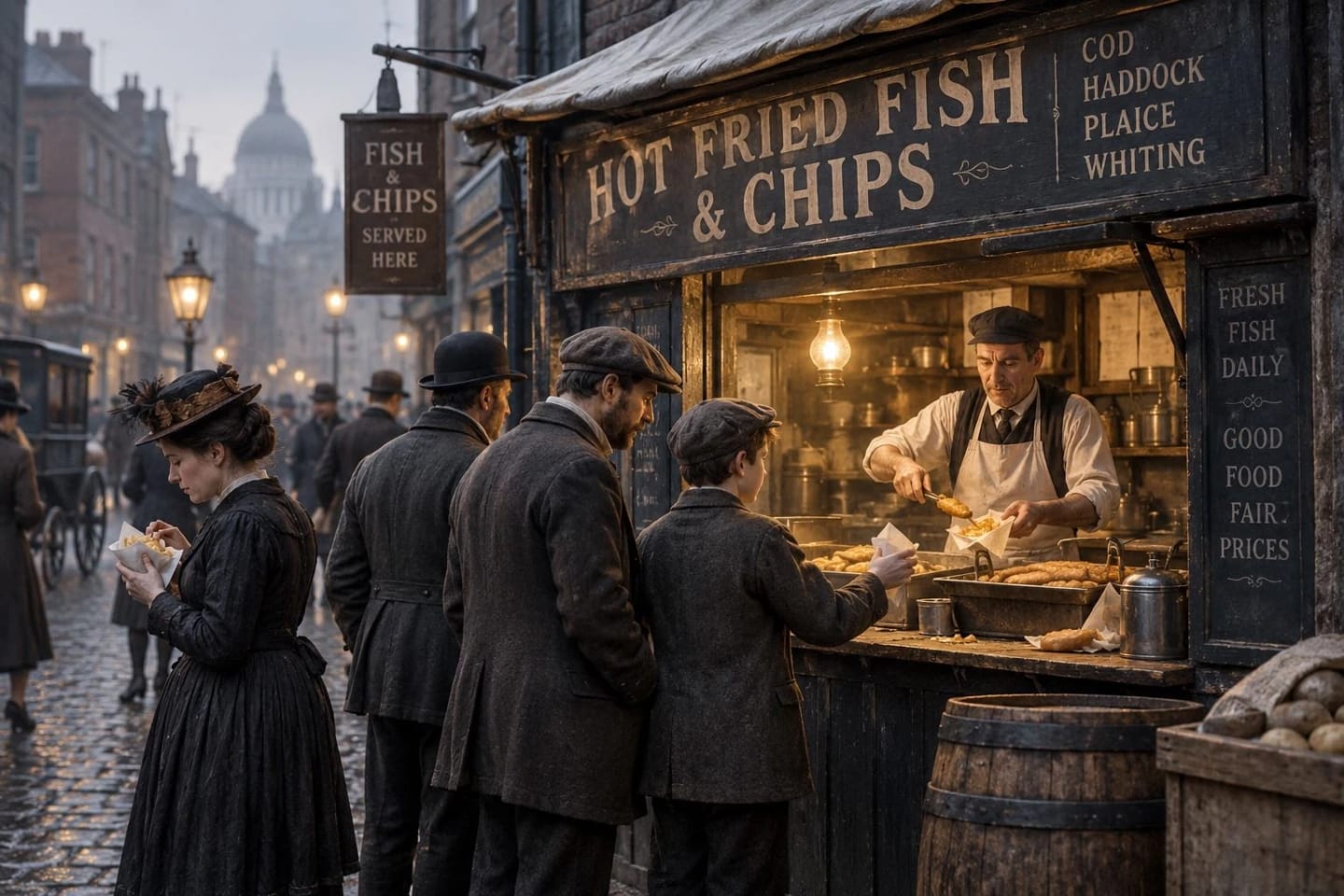
By the 19th century, fried fish was already familiar street food in London. Charles Dickens referred to a “fried-fish warehouse” in Oliver Twist in 1838, while Alexis Soyer's A Shilling Cookery for the People, published in 1854, included a recipe called “Fried Fish, Jewish Fashion”.
At this stage, however, it was not necessarily served with chips. English Heritage's account of Victorian street food describes fried plaice, sole, haddock, whiting and flounder being sold with salt or bread rather than fried potatoes. The expansion of the railway network also made it much easier to move fresh fish inland during the 19th century.
The familiar combination appeared around the 1860s. Who sold it first remains disputed. Joseph Malin, a Jewish immigrant in London, is often credited with opening a fish and chip shop around 1860. In northern England, John Lees is associated with selling fish and chips from a wooden hut in Mossley, Lancashire, around 1863.
What mattered more than the identity of the first seller was what happened next. Expanding fisheries, railways and growing industrial towns created ideal conditions for an inexpensive, filling hot meal. Fish and chip shops multiplied rapidly, particularly among working-class communities. London Museum estimates that Britain had around 25,000 fish and chip shops by 1920.
What Is Actually in Fish and Chips?
Despite the simple name, fish and chips can vary considerably depending on where it is served.
First, the chips. In Britain and Ireland, the word means pieces of fried potato — broadly what American English calls French fries — rather than the thin, crunchy potato snacks sold in packets. Those are known as crisps. Traditional fish-and-chip-shop chips are also usually thicker than typical fast-food fries, with a golden exterior and a soft potato centre.
The fish is most commonly cod or haddock, particularly in Britain, although the choice is far from limited to these two. Plaice, hake, pollock and whiting are among other white fish that can appear on fish-and-chip menus.
The fish is typically coated in batter before frying. Recipes vary, but the batter is generally based on flour and liquid, with water, sparkling water or beer among the common options.
A 2026 Seafish study of the UK fish and chip sector found notable regional differences in the choice of fish: haddock is particularly prominent in Scotland and parts of Yorkshire and the Midlands, while cod is more common elsewhere.
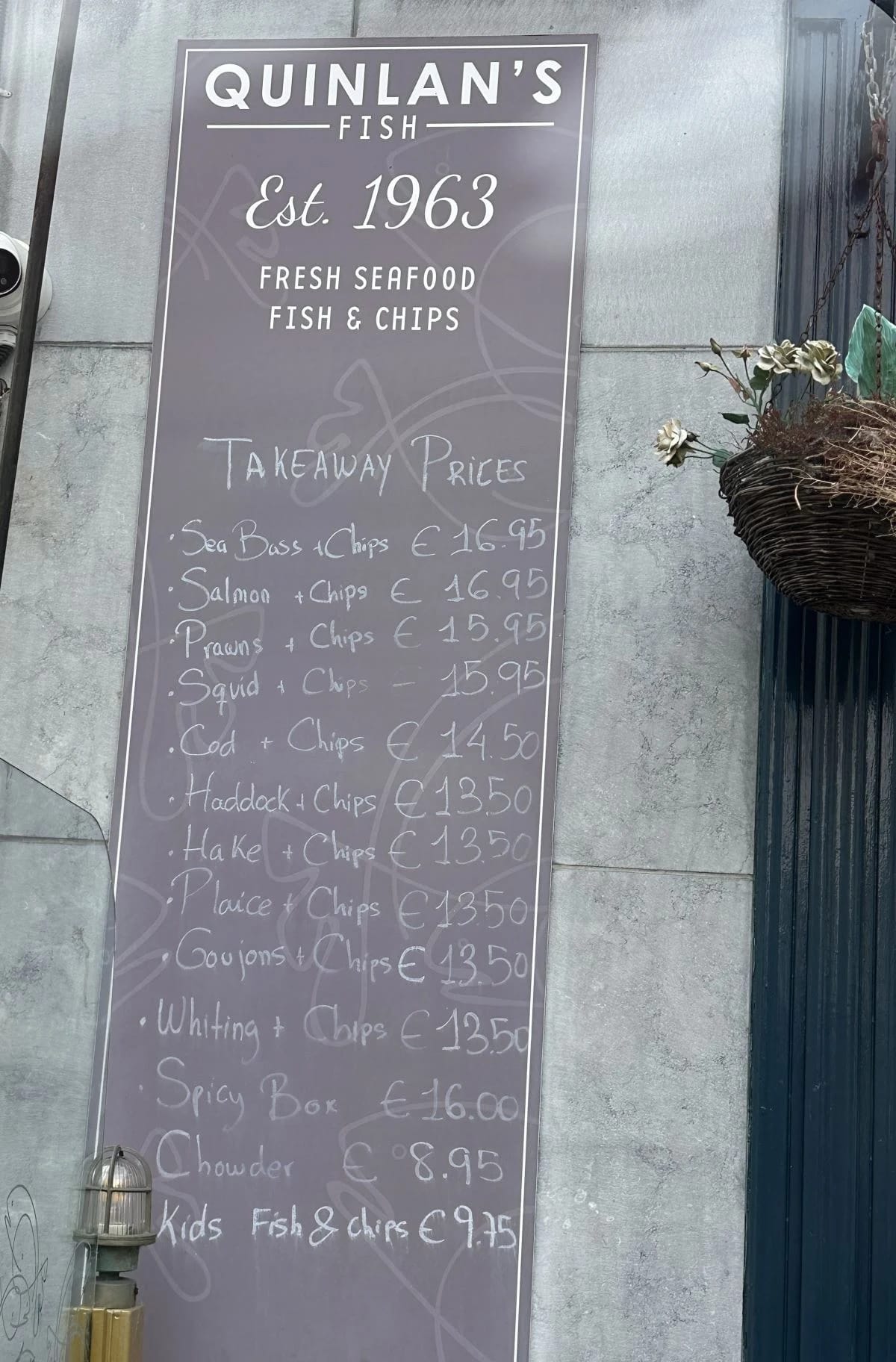
Modern seafood restaurants and specialist fish-and-chip shops can take the choice considerably further. At Quinlan's Fish in Tralee, County Kerry, for example, the menu includes cod, haddock, hake, plaice and whiting with chips, alongside options such as sea bass and salmon. Prawns, squid and fish goujons are also served with chips, showing how the familiar formula has expanded beyond the traditional battered white fish.
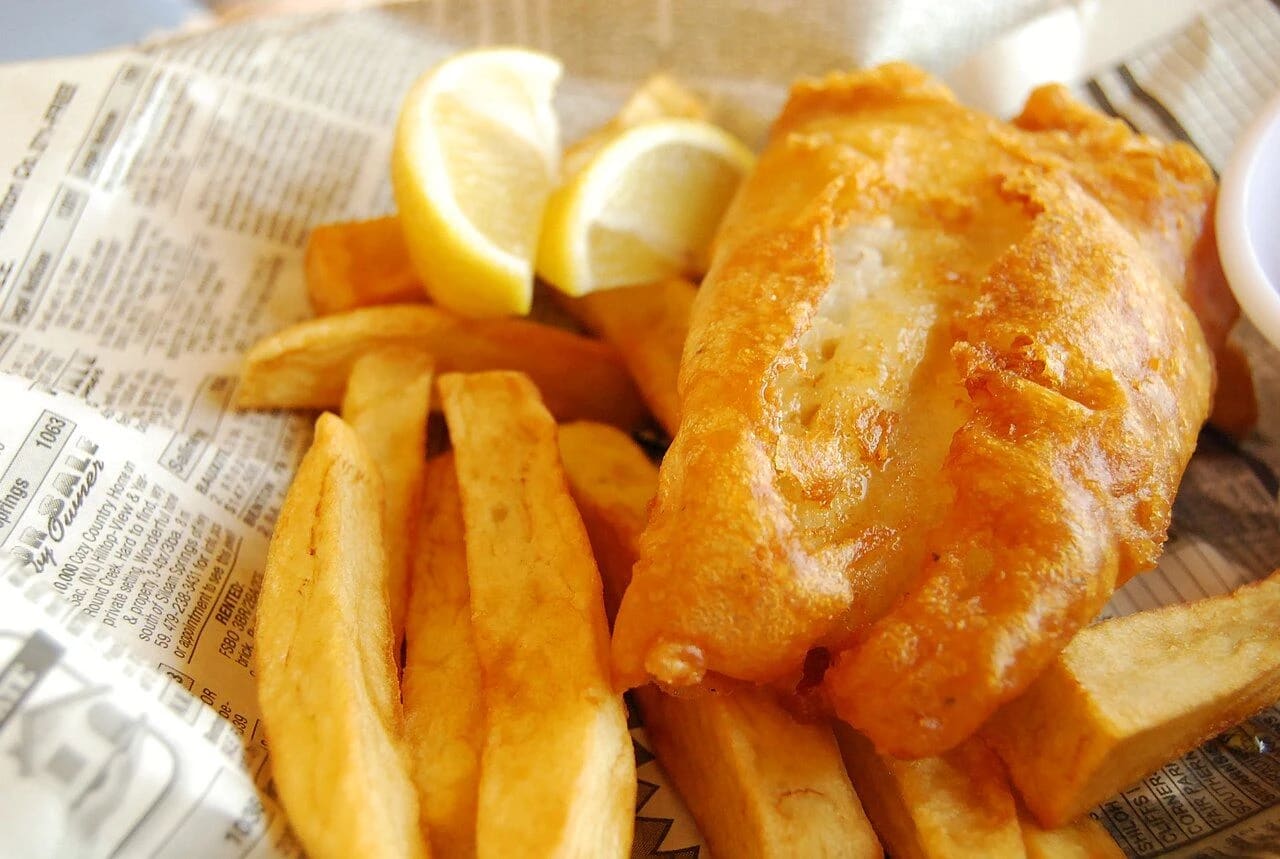
How fish and chips is served depends just as much on the setting. At its simplest, it is hot battered fish and chips prepared for takeaway. Traditionally, portions became famous for being wrapped in newspaper; today food-safe paper or boxes are used instead, with newspaper-style print sometimes retained as a visual reference to that tradition.
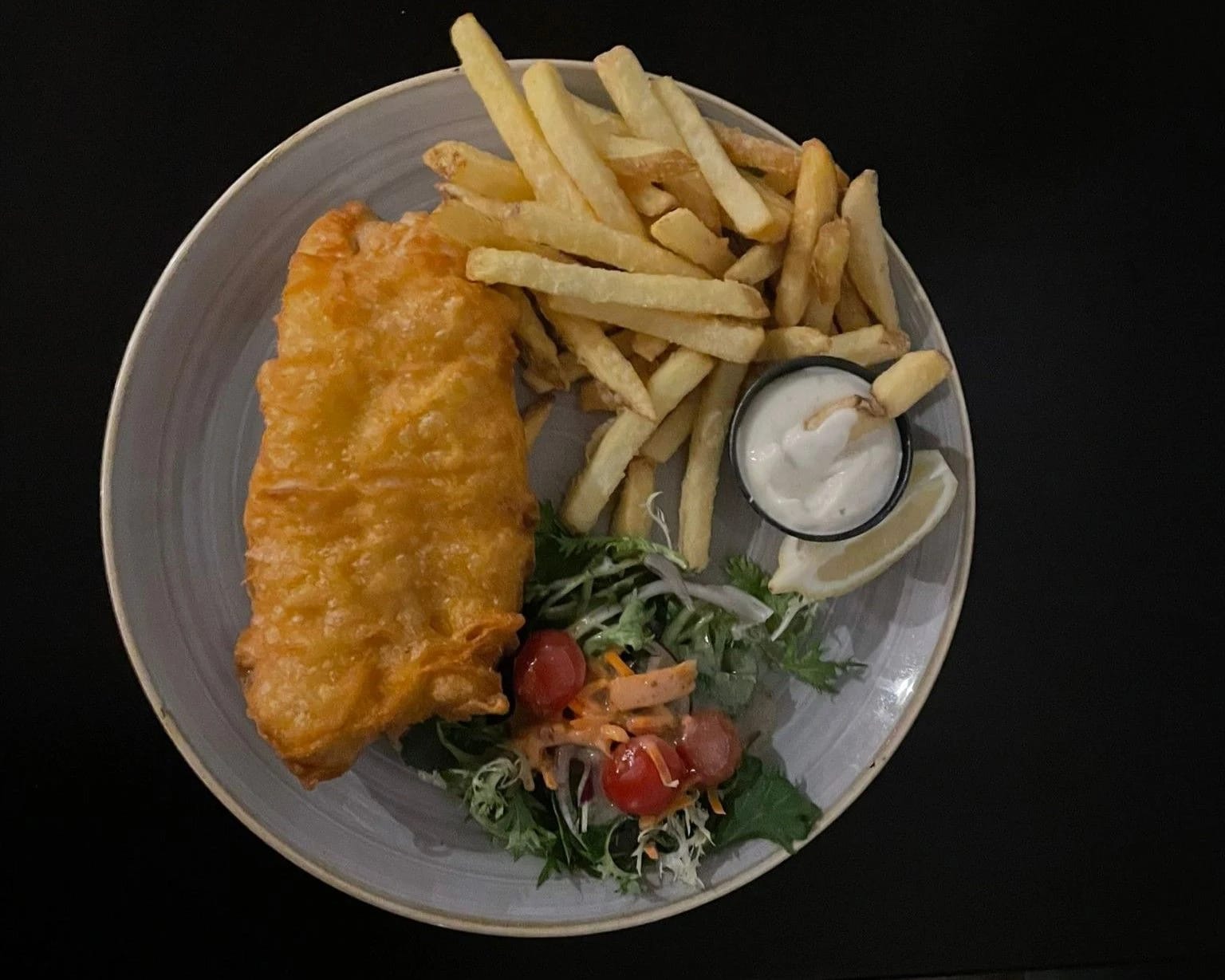
In pubs and restaurants, the same dish is more likely to arrive on a plate. Lemon and tartare sauce are common accompaniments, as are mushy peas or garden peas, while some restaurants add a small salad or other garnish. The presentation can therefore range from an uncomplicated takeaway meal to a more composed restaurant plate without changing the basic idea of the dish.
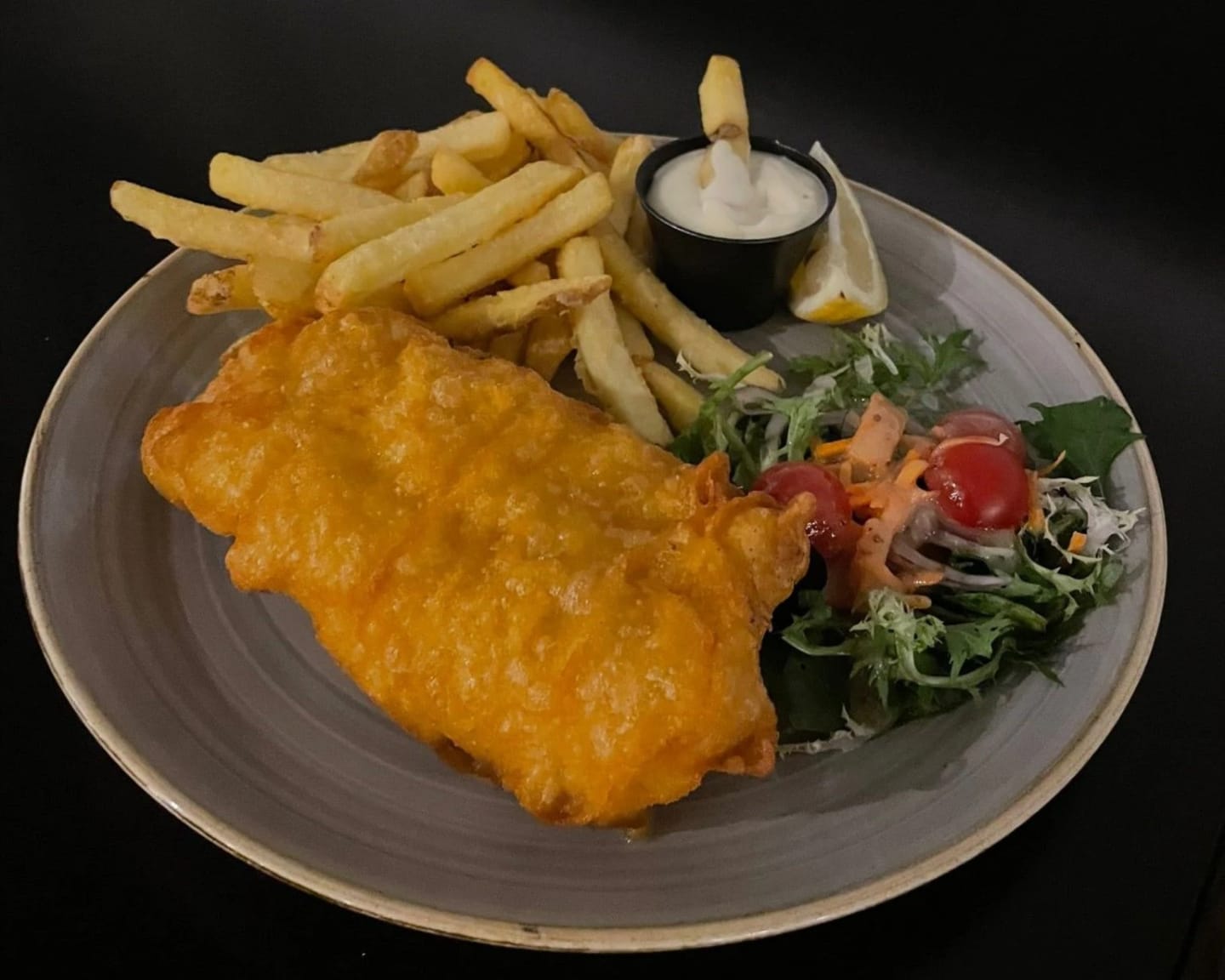
Fish and chips now occupies an unusual place in British and Irish food culture because it belongs to several types of dining at once. It can be a takeaway eaten straight from its wrapping, a quick meal from a neighbourhood chippy, a pub classic or a plated dish in a restaurant.
At the same time, the specialist fish-and-chip shop remains a distinct part of the food landscape. The UK's industry alone still includes around 7,210 independent fish and chip takeaway shops, according to research published by Seafish in 2026.
More than 160 years after fish and chips first appeared in Britain, the basic combination remains instantly recognisable — even as the choice of fish, accompaniments and the places serving it continue to evolve.
