

Halloween food today is easy to recognise: sweets, pumpkins, themed desserts and almost anything that can be decorated with a ghost or a spider.
But many of the foods traditionally eaten at this time of year have little to do with modern Halloween imagery.
Across Europe, the period between 31 October and 2 November brings together Halloween, All Saints’ Day and All Souls’ Day. Over centuries, different places developed their own foods for these days — some connected with remembrance of the dead, others with religion, the autumn harvest or local celebrations.
Some of those traditions have largely disappeared. Others still return to bakeries, markets and supermarket shelves every autumn.
Soul Cakes — Food in Exchange for a Prayer
Long before bags of miniature chocolate bars were handed out at the door, there were soul cakes.
In medieval England, and later in parts of the country where the tradition survived, poorer people would go from house to house around All Saints’ and All Souls’ days in a custom known as souling. They received small cakes from wealthier households and, in return, offered prayers for the souls of deceased family members.
The practice is recorded from around 1400, although contemporary references already described it as an established custom. By the 19th century, groups — often children — were still going from door to door for soul cakes in parts of England.
The cakes themselves were small and round, closer in appearance to biscuits than to what we would now call cake. Recipes varied, but versions included oats, currants or raisins and warming spices such as cinnamon, ginger and nutmeg. A cross was often marked across the top.
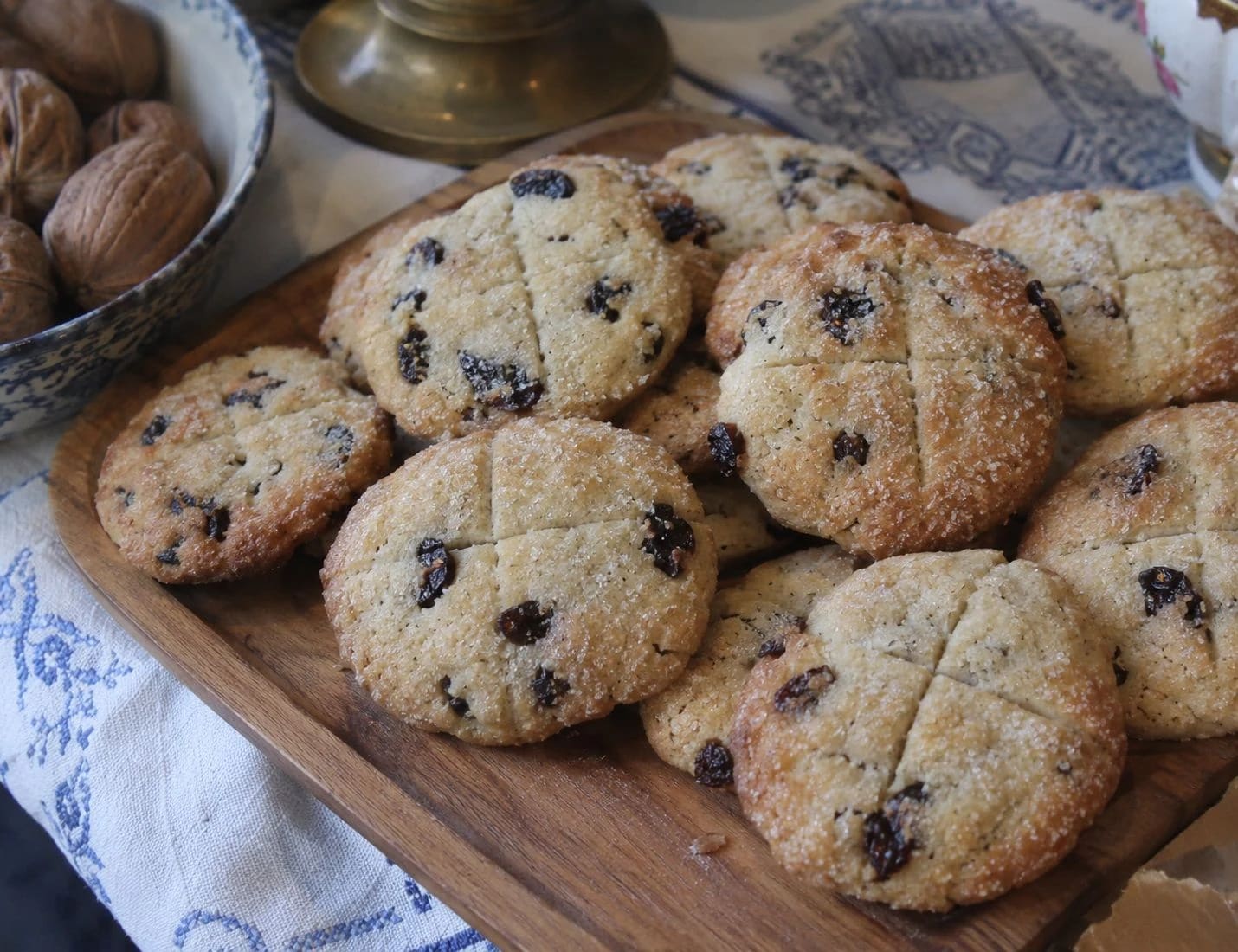
It is tempting to describe souling simply as the origin of trick-or-treating. The development of the modern custom is more complicated, involving other practices such as guising as well. But the resemblance is striking: people moving from door to door at Halloween, receiving food in return for performing an expected ritual.
The meaning of the exchange, however, was very different. A soul cake was not simply a treat. Giving and receiving one connected food with charity, prayer and remembrance of the dead.
Barmbrack — A Cake with Your Future Inside
In Ireland, another Halloween bake developed a rather different relationship with the future.
Báirín breac, better known today as barmbrack, is a fruit-filled bread traditionally eaten at Halloween. Unlike soul cakes, it has never really disappeared. Walk through an Irish supermarket in October and bracks are still easy to find.
And many still contain the most famous part of the tradition: a ring hidden inside.
Finding it in your slice traditionally meant that you would be the next to marry.
Historically, the ring was only one of several objects that might be baked into a brack. A coin could indicate wealth, a rag poverty, a button bachelorhood and a thimble spinsterhood. The National Museum of Ireland also records versions containing a stick and a crucifix, each carrying its own prediction.
Most of those objects have understandably vanished from commercially produced barmbracks. The ring, however, has proved remarkably persistent.

That makes barmbrack more than an old recipe revived for a festival. It is one of the clearest examples of an Irish Halloween food tradition that has remained part of everyday seasonal life.
Read more: Barmbrack: Ireland’s Halloween Cake That Could Tell Your Future.
Huesos de Santo — Spain’s ‘Saints’ Bones’
The name sounds considerably more macabre than the sweet itself.
Huesos de santo, literally “saints’ bones,” are traditional Spanish sweets associated with All Saints’ Day on 1 November.
They are made from almond marzipan formed into small pale cylinders. Traditionally, the hollow centre is filled with a rich sweet egg-yolk preparation, giving the finished confection its distinctive bone-like appearance.
Modern pastry shops have expanded well beyond the original filling. Chocolate, coconut and other flavours now appear alongside the traditional version, but the sweets themselves remain strongly associated with the beginning of November. Madrid's official tourism organisation describes huesos de santo as one of the characteristic pastries of All Saints’ Day, alongside buñuelos de viento, small filled fritters.

Today, the boundary between the older celebration and Halloween is becoming increasingly blurred. Madrid bakeries sell the traditional sweets while the city around them fills with pumpkins, costumes and newer Halloween treats. Even huesos de santo themselves now appear in more colourful and contemporary variations for Halloween night.
The result is an interesting coexistence: an international Halloween has arrived, but it has not displaced the sweets that were already associated with these days.
Ossa dei Morti — Sicily’s ‘Bones of the Dead’
Travel from Spain to Sicily and the name becomes darker still.
Ossa dei morti translates as “bones of the dead.” They belong to Sicily's extensive tradition of sweets associated with the commemoration of the dead at the beginning of November.
Their appearance is unusual. The biscuits develop contrasting sections during preparation and baking, producing hard, pale shapes that help explain the rather literal name.

But ossa dei morti are only one part of a much larger Sicilian tradition.
November pastry displays can include colourful frutta Martorana, almond-paste sweets modelled with remarkable detail to resemble fruit, alongside other regional dolci dei morti. Sicily's official tourism organisation describes November as a time when departed loved ones are remembered “with sweetness”, specifically mentioning ossa dei morti among the foods associated with the season.
It is a useful reminder that the foods eaten around Halloween do not all originate in Halloween itself.
In Sicily, the connection is with Festa dei Morti, the commemoration of the dead around 2 November. Yet on the calendar — and increasingly in contemporary culture — these traditions occupy the same few autumn days.
Castanyada — Panellets, Chestnuts and the Taste of Autumn
In Catalonia, the end of October has another distinctive food tradition.
La Castanyada is celebrated around the night of 31 October and All Saints’ Day. Its foods are less theatrical than “saints’ bones” or “bones of the dead”, but perhaps even more closely tied to the season itself.
The most recognisable are panellets — small almond-based sweets made in different varieties. Among the best known are those coated in pine nuts, giving them their characteristic golden, textured exterior.

Barcelona's tourism organisation describes panellets as an essential part of the All Saints celebrations and the Castanyada tradition.
And then there are the chestnuts.
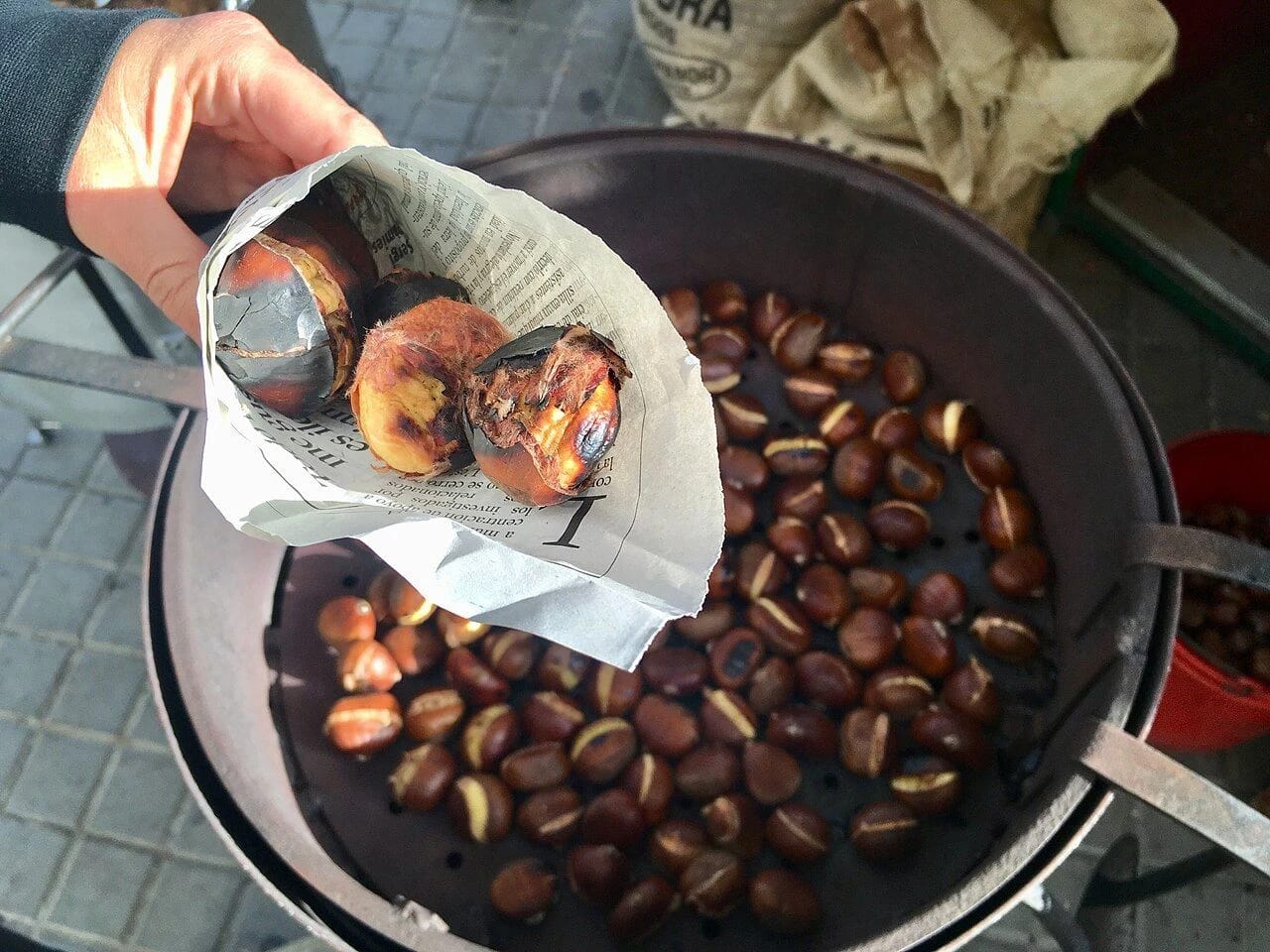
Hot roasted chestnuts are one of the defining foods of Castanyada, traditionally joined by roasted sweet potatoes and panellets. Around this time of year, chestnut sellers become part of the seasonal streetscape, while families and friends gather around the foods associated with the celebration. Barcelona tourism material describes Castanyada as a celebration spanning the night of 31 October and 1 November, with chestnuts and panellets traditionally eaten for All Saints’ Day.
Halloween now exists alongside it. Costumes, pumpkins and international Halloween imagery have become familiar in Catalonia too, but Castanyada has not disappeared.
Instead, the two traditions increasingly share the same night.
Halloween may now be associated with sweets and pumpkins, but across Europe the same autumn days are still marked by much older food traditions. Whether connected to Halloween, All Saints’ Day or All Souls’ Day, many of these foods continue to return to bakeries, markets and family tables every year.
Sources: English Heritage · National Museum of Ireland · Madrid Tourism · Visit Sicily · Barcelona Tourism · Chestnuts in Barcelona
