
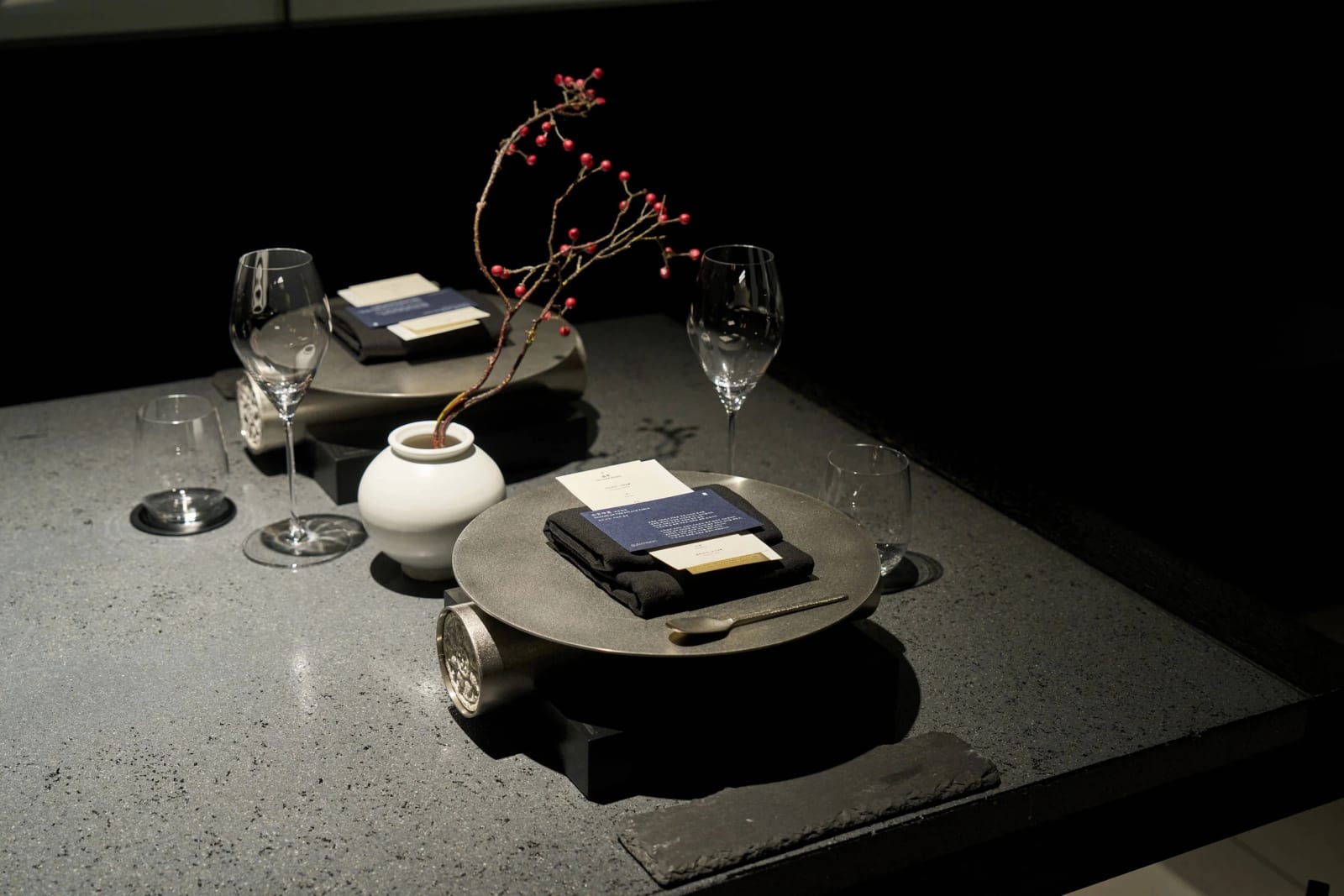
Imagine Korea several centuries ago, when kimchi had not yet acquired the familiar red colour of chilli, wheat was a precious ingredient, and royal banquets reflected far more than wealth and ceremony. Food carried stories of hospitality, social customs and traditional beliefs about health, while recipes and cooking knowledge passed from one generation to the next.
Today, in the heart of Yeouido, Seoul's bustling financial district, SUTIMOON invites diners to discover elements of that culinary world through contemporary Korean fine dining. Rather than attempting to reproduce a Joseon royal banquet exactly, the restaurant draws on historical recipes, regional ingredients, traditional fermentation and Korean craftsmanship to offer its own interpretation of the past.

A Journey Back to the Royal Tables of Joseon
During the Joseon Dynasty, which ruled Korea from 1392 to 1897, ingredients could carry symbolic significance, certain preparations were associated with hospitality or special occasions, and food was understood through traditional beliefs about health and wellbeing.
Some of this knowledge survives in historical cookbooks, including Suunjapbang and Eumsik Dimibang, which preserve recipes and culinary practices dating back approximately five centuries. The two works were recognised in UNESCO's Memory of the World Asia-Pacific Regional Register in 2026.
As Executive Chef Yoonhaeng Heo, known as Hailey, explains:
"We believe that understanding the stories behind ingredients is just as important as appreciating their flavours."
Although ingredients, techniques and tastes have changed considerably since the Joseon period, surviving recipes and culinary traditions provide inspiration for SUTIMOON's tasting menu, where historical references become part of the dining experience.
Seongyeon: A Contemporary Royal-Inspired Banquet
SUTIMOON offers three tasting menus — Ayeon (The Refined Banquet), Hwayeon (The Flourished Banquet) and Seongyeon (The Grand Banquet) — each presenting a different interpretation of Korea's royal dining traditions. The name Seongyeon combines a traditional term for palace banquets with a word expressing the highest level of celebration and grandeur.
The signature Seongyeon experience lasts approximately three hours, featuring seasonal ingredients sourced from different regions of Korea and a special hidden noodle course, one of the restaurant's distinctive creations.
Small, carefully considered performances by the culinary and service teams accompany the meal, creating an experience designed to engage all five senses rather than focusing solely on the food.
Hwangjagye Hondon: A King's Favourite Dumplings
One of SUTIMOON's most intriguing dishes, Hwangjagye Hondon, draws on a story associated with King Sukjong, the nineteenth ruler of the Joseon Dynasty, who reigned from 1674 to 1720.
According to the historical account shared by Executive Chef Hailey, the king continued to enjoy a particular preparation of small dumplings even while suffering from an illness associated with fluid accumulation in his abdomen. Similar preparations were also associated with sikchi, a traditional approach to food-based healing, and were recommended for elderly people who struggled with digestion.
Hailey explains that the dumplings enjoyed by King Sukjong were made with thin wheat-flour wrappers, although wheat was a precious and relatively scarce ingredient during much of the Joseon period.
At SUTIMOON, the kitchen reinterprets this dish using buckwheat wrappers filled with pheasant, chicken, black garlic and wild pine mushrooms. The dumplings are served in a nourishing broth prepared with ten different ingredients.
They are followed by another interpretation: chicken wings filled with pork and chicken tenderloin. While Hwangjagye Hondon emphasises delicate, understated flavours, the chicken wing dumplings introduce the distinctive aroma of charcoal cooking and are accompanied by traditional pickled vegetables.

Hanwoo Beef with Aged Kimchi
Another distinctive preparation combines premium Korean Hanwoo beef with fermented seasonings and four carefully selected accompaniments.
Hanwoo is a native Korean cattle breed raised in Korea for generations and valued for its rich marbling and flavour. SUTIMOON selects the highest 1++ grade sirloin, with a marbling score of nine.
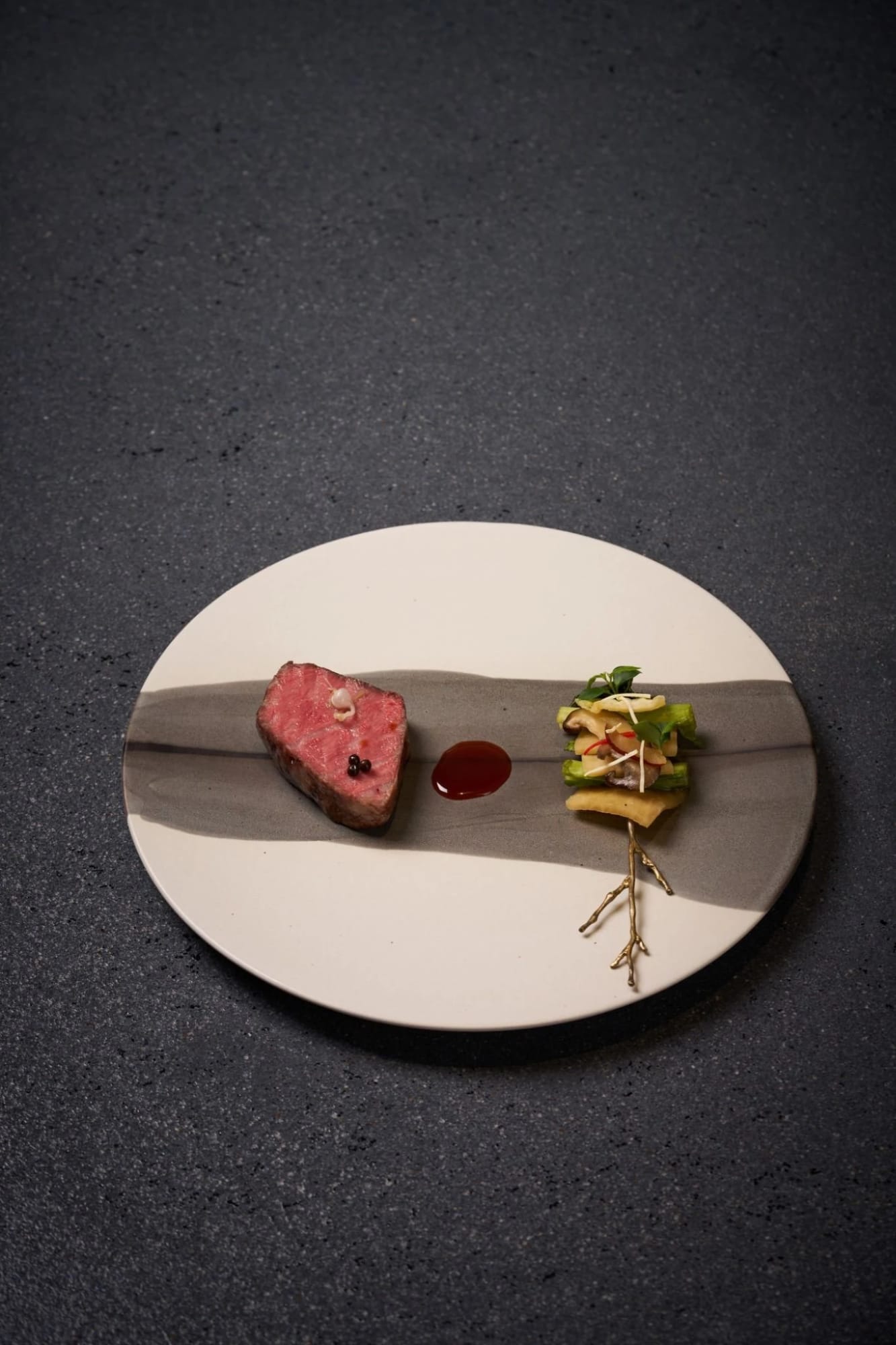
The beef is seasoned with house-made nuruk salt, a traditional fermented seasoning. During preparation, the kitchen carefully trims and renders the fat, then uses it to enhance the meat's aroma and flavour during charcoal cooking.
Drawing on historical Korean cooking techniques, the beef is prepared slowly over a traditional grill and served in relatively thin portions rather than as a conventional thick-cut steak.
Four small accompaniments provide contrasting flavours, each serving a role similar to traditional Korean banchan.
Seasonal floral and herb pickles introduce freshness, with eundallae pickles in spring or acacia blossom pickles in summer. Fresh peppercorn pickles contribute a gently pungent note, while a sauce combining hairtail fish roe and gochujang adds subtle sweetness and depth.
The fourth accompaniment is Jangkimchi, a traditional Korean kimchi fermented with aged soy sauce and vegetable stock.
Unlike the familiar varieties seasoned with chilli powder or fish sauce, Jangkimchi uses traditional Korean soy sauce aged for at least three years. The vegetables ferment together with the soy sauce and vegetable stock, developing a delicate balance of sweet and sour flavours while retaining a pleasantly crisp texture.
Chestnuts, jujubes, rock tripe and shiitake mushrooms add further complexity — ingredients not commonly encountered in everyday kimchi.
According to Hailey, this style of kimchi was frequently served at royal banquets and formal drinking occasions during the Joseon Dynasty. At SUTIMOON, it offers a lesser-known expression of Korean culinary heritage while balancing the richness of the charcoal-grilled Hanwoo.
Beyond the Food: Pairings and the Dining Experience
The restaurant offers a signature beverage pairing combining wines with traditional Korean alcoholic drinks, alongside a non-alcoholic alternative featuring fermented teas, fruits and other ingredients.
For international visitors, English-language service is available, with staff explaining the origins of dishes, traditional ingredients and the cultural stories behind their preparation, connecting each course to the wider dining experience.
Where Charcoal Meets the Moon
The name SUTIMOON combines Suti, described by the restaurant as a regional dialect word for charcoal from Hamgyeongbuk-do in northern Korea, with the English word moon. The founders chose the name because the gentle glow of burning charcoal reminded them of moonlight.
At the centre of the dining room stands an island kitchen where all cooking is performed exclusively over charcoal, without gas or firewood. This method contributes to the distinctive aromas of the dishes and forms an essential part of the restaurant's culinary identity.
The moon motif continues through handcrafted wooden artworks displayed on the tables, while other interior elements draw inspiration from traditional Korean culture.
Lighting fixtures recall the shape of the gat, a traditional Korean hat, and the blinds evoke hanji, the handmade paper historically used in Korean architecture.
One particularly distinctive element is Gwol, an artwork by Jeong Hoon Lee inspired by sumaksae, the decorative roof-end tiles found on traditional Korean buildings and palaces. The artwork also serves as the presentation plate for the opening course, Chochan.

SUTIMOON collaborates with Korean craftspeople specialising in wood, glass, metal, lacquerware, chopsticks and ceramics, incorporating their work throughout the restaurant.
The Story Behind SUTIMOON
SUTIMOON was founded in 2023 by owner-chef Joochun Jung, known as Tony, in the heart of Yeouido's financial district.
The restaurant's inspiration is closely connected to Tony's family history. According to SUTIMOON, his grandmother and earlier generations of women in his family had connections to the royal kitchens of the Joseon Dynasty, where they prepared food for members of the royal household. Growing up with this heritage, he developed an interest in preserving Korean culinary traditions.
His professional background also includes international fine-dining experience, with L'Atelier de Joël Robuchon in Paris and Noma in Copenhagen among the restaurants listed in his official biography.
Alongside Tony, Executive Chef Yoonhaeng Heo, known as Hailey, contributes international fine-dining experience and extensive knowledge of traditional Korean cooking.
Hailey spent approximately seven years studying and working in Melbourne, Australia, including two years at the acclaimed Vue de Monde, where she completed her time as Junior Sous Chef. After returning to Korea, she studied kimchi-making with a renowned master in Pyeongchang, Gangwon Province, and spent four years learning fermentation techniques from a jang master in Paju.
Her studies covered cultivating and fermenting soybeans, preparing meju (fermented soybean blocks), traditional soy sauce, doenjang, gochujang, vinegar and Korean alcoholic beverages. This knowledge contributes to SUTIMOON's approach to seasoning, preservation and historical dishes.
Together, the chefs bring their different backgrounds to a shared interest in preserving Korea's culinary heritage while finding new ways to present it. In the middle of Seoul's fast-paced financial district, SUTIMOON offers a place to discover these traditions through contemporary cuisine, charcoal cooking and Korean craftsmanship.

Restaurant: SUTIMOON
Location: Yeouido, Seoul, South Korea
Tasting menus: From ₩129,000 (approx. €87) to ₩329,000 (approx. €223) per person, with lunch options also available.
Menus and reservations: Official website
