
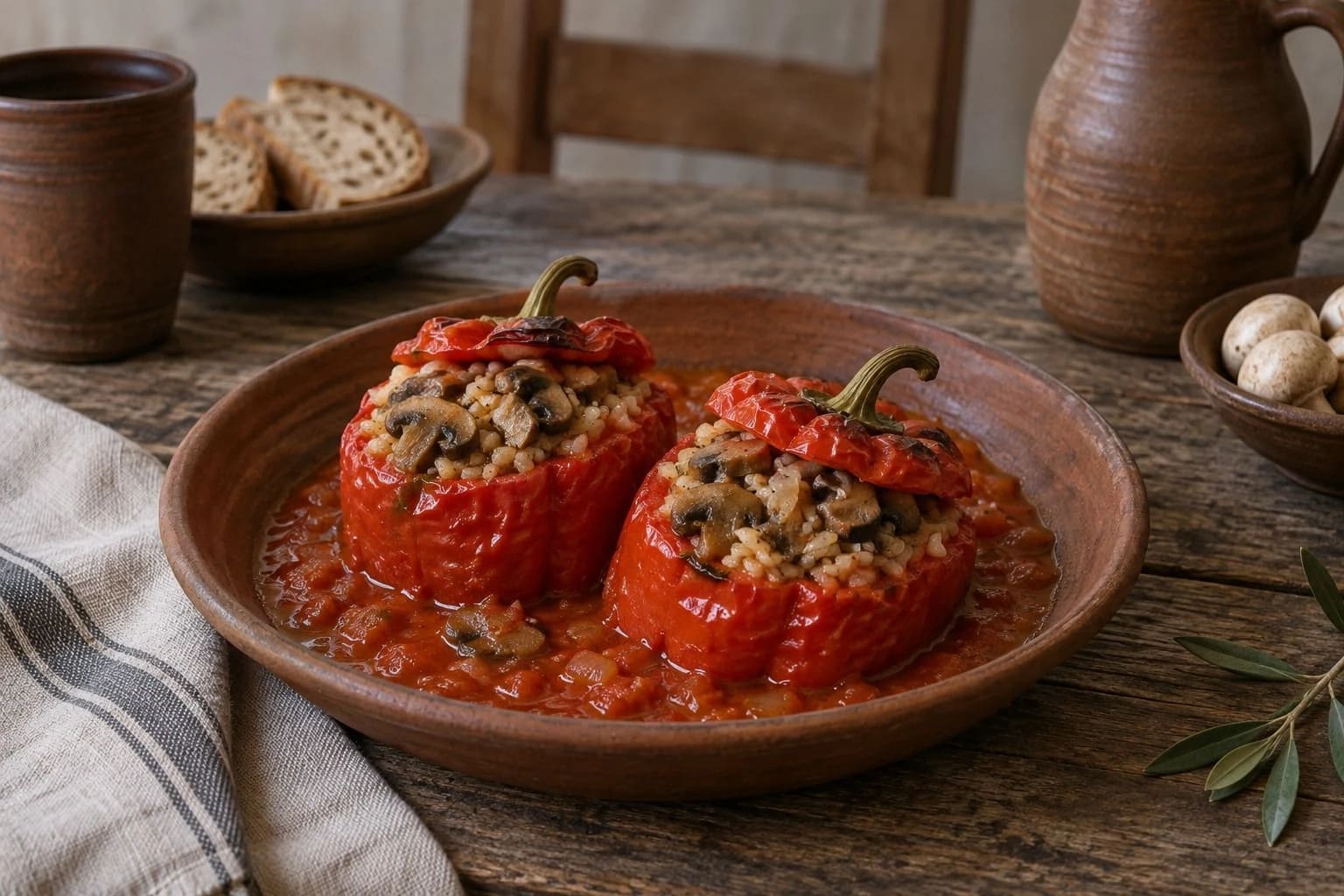
In Serbian, posno tells you that a dish is suitable for fasting. In Serbian Orthodox life, periods such as Great Lent before Easter and the Nativity Fast before Christmas change what people cook and offer to guests. The fast is a time of spiritual preparation, and what goes on the table is one part of that observance. A family may make a fasting meal for Christmas Eve, or for its slava, the celebration of its patron saint, if the feast falls during a fast.
The rules vary by day and observance. My stuffed peppers contain no meat, dairy or eggs, but I cook them with olive oil, so I would serve them on a day when oil is permitted. When I cook for someone who observes the fast, that detail matters as much as what goes inside the pepper.
Beans, cabbage and the shared table
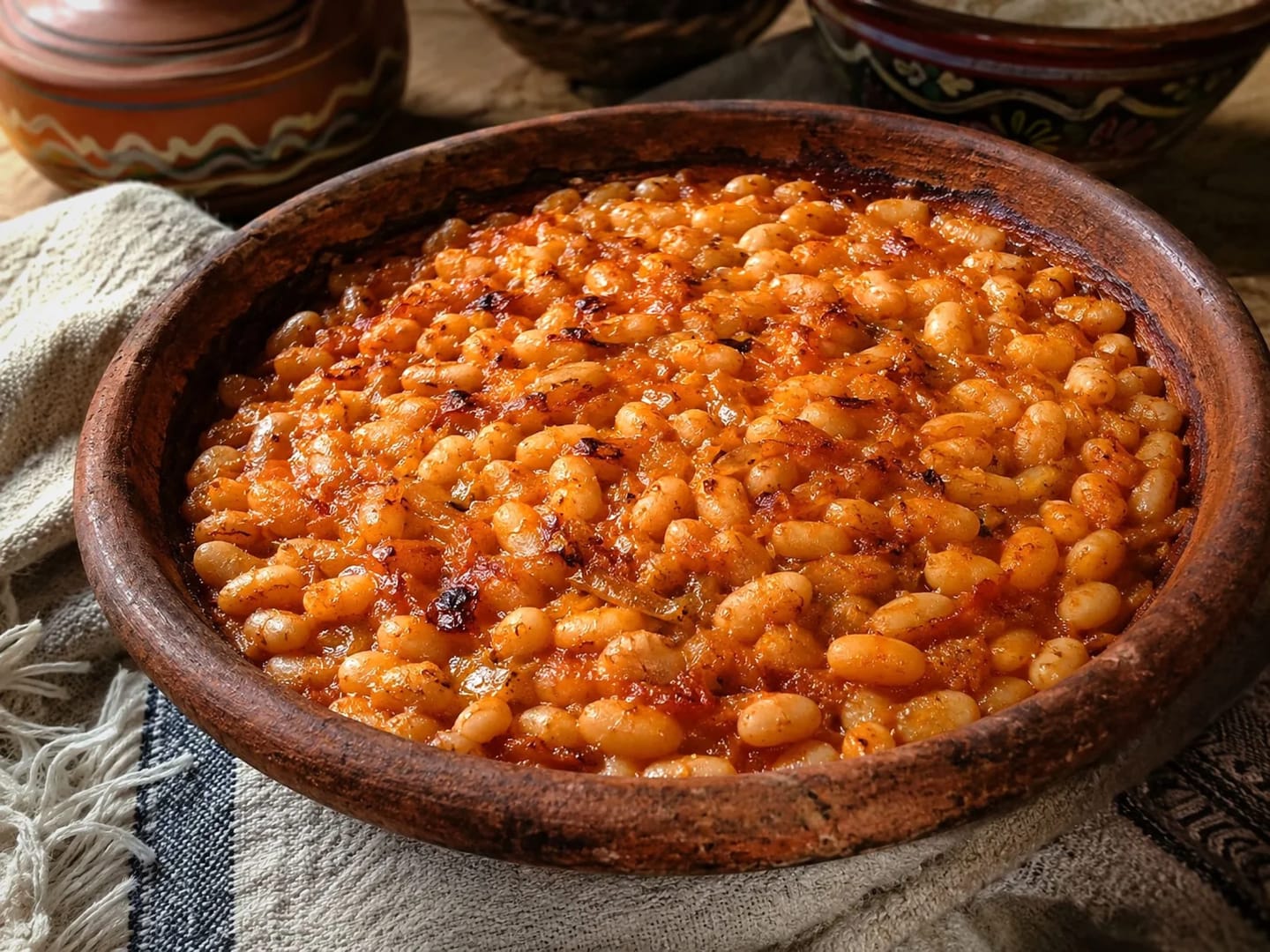
Prebranac, white beans baked with plenty of onions, is at home on a fasting slava table. Put a baking dish in the middle and people can help themselves as they sit down or go back for another spoonful. I soften the onions before the dish goes into the oven and keep some bean cooking liquid to give it enough moisture. I like to serve it with shredded cabbage dressed with vinegar. The sharpness goes well with the sweet onions and soft beans.
Posna sarma is the fasting version of a dish many Serbian families already know from winter gatherings: rolls of soured cabbage cooked together in a pot. You still wrap the leaves one by one and bring a pot of rolls to the table; for the fasting version, rice with onions and mushrooms can take the place of a meat filling. The soured leaves give the dish its character. Taste one first, because how much salt you add to the filling depends on how salty the cabbage is.
In The Grand Heritage Cookbook, I draw inspiration from Hilandar, the Serbian Orthodox monastery on Mount Athos. I make no claim that these peppers came from the monks’ kitchen or that they are a medieval recipe. Hilandar is a point of reference for how I think about cooking within the limits of the fast. It makes me ask what I can get from a pan of onions or a handful of mushrooms before I reach for anything else.
Leave a little room in the pepper
With posne punjene paprike, the first thing I tell another cook is to stop before the pepper looks full. Rice needs space to expand as it absorbs the tomato broth. I also cook the moisture out of the mushrooms before adding the rice. That gives the filling a fuller flavour, while the gentle simmer later gives the rice the liquid it needs. Finally, test a grain from the centre of a pepper. You can’t judge the rice by how tender the pepper looks from the outside.
Posne punjene paprike: Serbian stuffed peppers with mushrooms and rice
Serves 4
800 g small red bell peppers (about 8)
180 g uncooked white rice
350 g mushrooms, finely chopped
180 g onion, finely chopped
35 g olive oil
350 g tomato passata
500 ml water, plus a little more if needed
5 g salt, divided
1 g ground black pepper
Cut the tops off the peppers and keep them as lids. Remove the seeds and pale membranes. Rinse and drain the rice.
Heat the oil in a wide pan over medium heat. Cook the onion until soft, about 8 minutes. Add the mushrooms and cook until most of the liquid they release has evaporated. Stir in the uncooked rice, half the salt and the pepper.
Fill the peppers no more than three-quarters full and replace the tops loosely. Stand them close together in a deep, heavy pot. Mix the passata, water and remaining salt and pour around the peppers. The sauce should come partway up their sides.
Bring to a gentle simmer, cover and cook over low heat for 50–60 minutes. If the sauce reduces too far, add a little hot water. Taste rice from the middle of a pepper; if the grains are still firm at the centre, give them a few more minutes.
Rest off the heat for 10 minutes. Serve two peppers per person and spoon the tomato sauce over them.
How I carry these dishes into my work in Singapore
At Pano Kato I lead a team of cooks with different culinary backgrounds. Take Greek moussaka: before walking a cook through the recipe, I can show them how a slice should hold, taste the layers together, and explain how far it needs to set before cutting. Written quantities and a reference photo help the next person get the same result when I’m not there.
I use the same thinking when I write down a Serbian recipe for readers in Singapore. Peppers, mushrooms and rice are familiar ingredients here, so I can spend less time explaining what to buy and more time showing what to look for: how much space to leave at the top, how gently the sauce should bubble, and how the rice should feel when you bite into it. I keep the name posne punjene paprike and explain why it belongs on a fasting table. That way, someone can make the dish in their own kitchen and know a little about the table it came from.
Đorđo Ćetković, Executive Chef, Pano Kato, Singapore
