
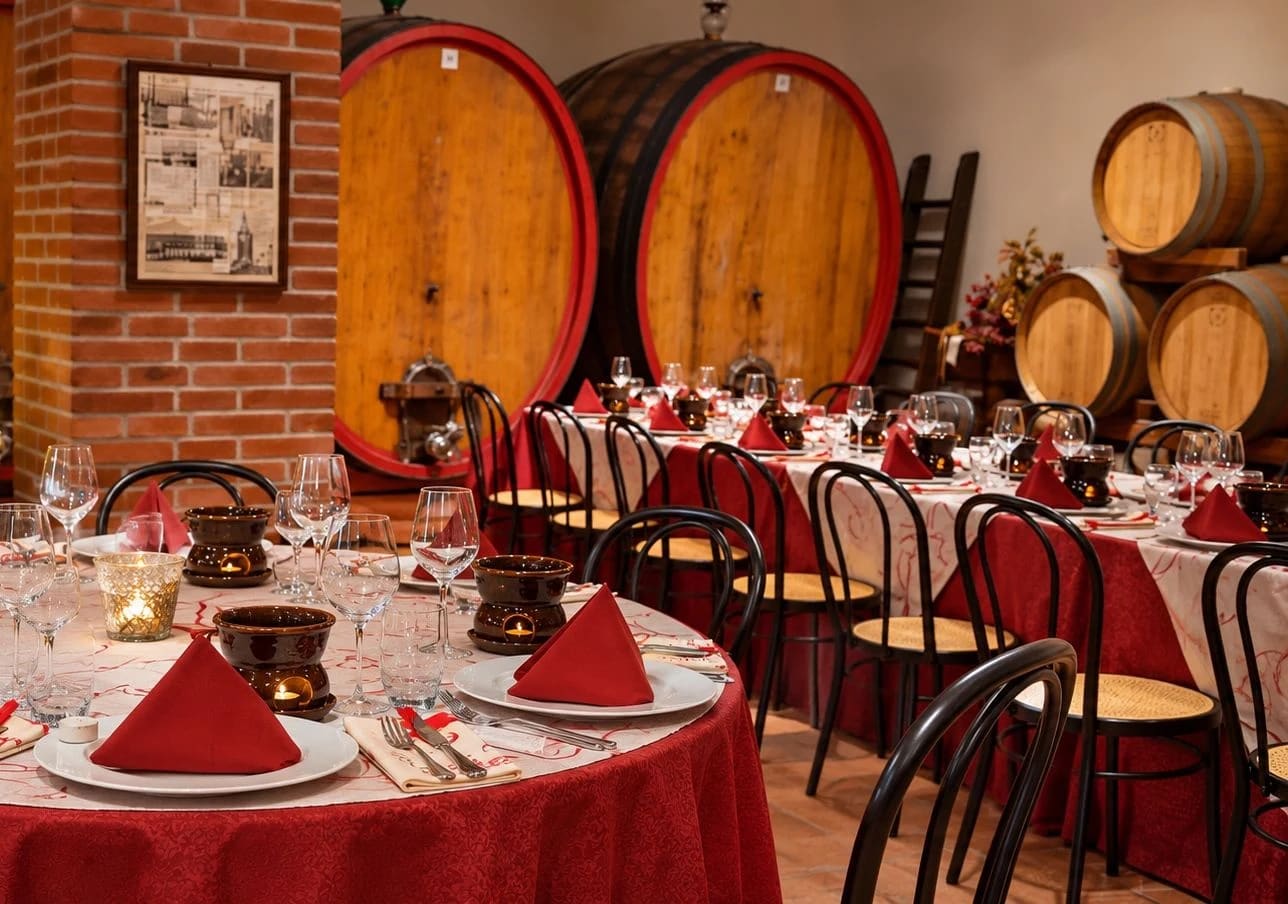
There is no mistaking the arrival of bagna cauda season in Piedmont, northern Italy. As the grape harvest comes to an end and the first cold days settle over the vineyards, restaurants and family kitchens begin preparing one of the region’s most recognisable dishes.
Garlic, anchovies and olive oil might seem an unlikely combination to build a celebration around, but in Piedmont, bagna cauda has been bringing people to the table for generations.
This November, the tradition returns with the 14th edition of Bagna Cauda Day, held over two weekends, 20–22 and 27–29 November. Founded in Asti in 2013 by the cultural association Astigiani, the event now involves more than 160 participating establishments and reaches five continents.
A Dish That Tells a Story
Literally meaning “hot sauce” in Piedmontese dialect, bagna cauda is slowly prepared using garlic, salted anchovies and olive oil, then served warm in terracotta pots called fujot.
Its history reflects the old trading routes that brought salted anchovies from the Mediterranean into landlocked Piedmont.
The sauce is traditionally enjoyed with seasonal vegetables, particularly the prized cardo gobbo di Nizza Monferrato, a locally grown variety of cardoon, alongside peppers, Jerusalem artichokes, potatoes and cabbage.
It was once closely associated with the end of the agricultural season, when families and vineyard workers gathered after the harvest. That sense of occasion remains part of its appeal today.
In Mirella’s Kitchen
In the small hamlet of Repergo, near Asti, Vigneti Brichet has been producing wine for four generations. Its agriturismo restaurant, Emporio del Gusto, is among the establishments participating in this year’s celebration.
In the kitchen is chef Mirella Dovico, who trained under Giovanni Goria, the renowned Piedmontese gastronome and passionate advocate of the region’s culinary heritage.
Mirella has maintained a traditional approach to cooking, allowing familiar recipes and local ingredients to speak for themselves.
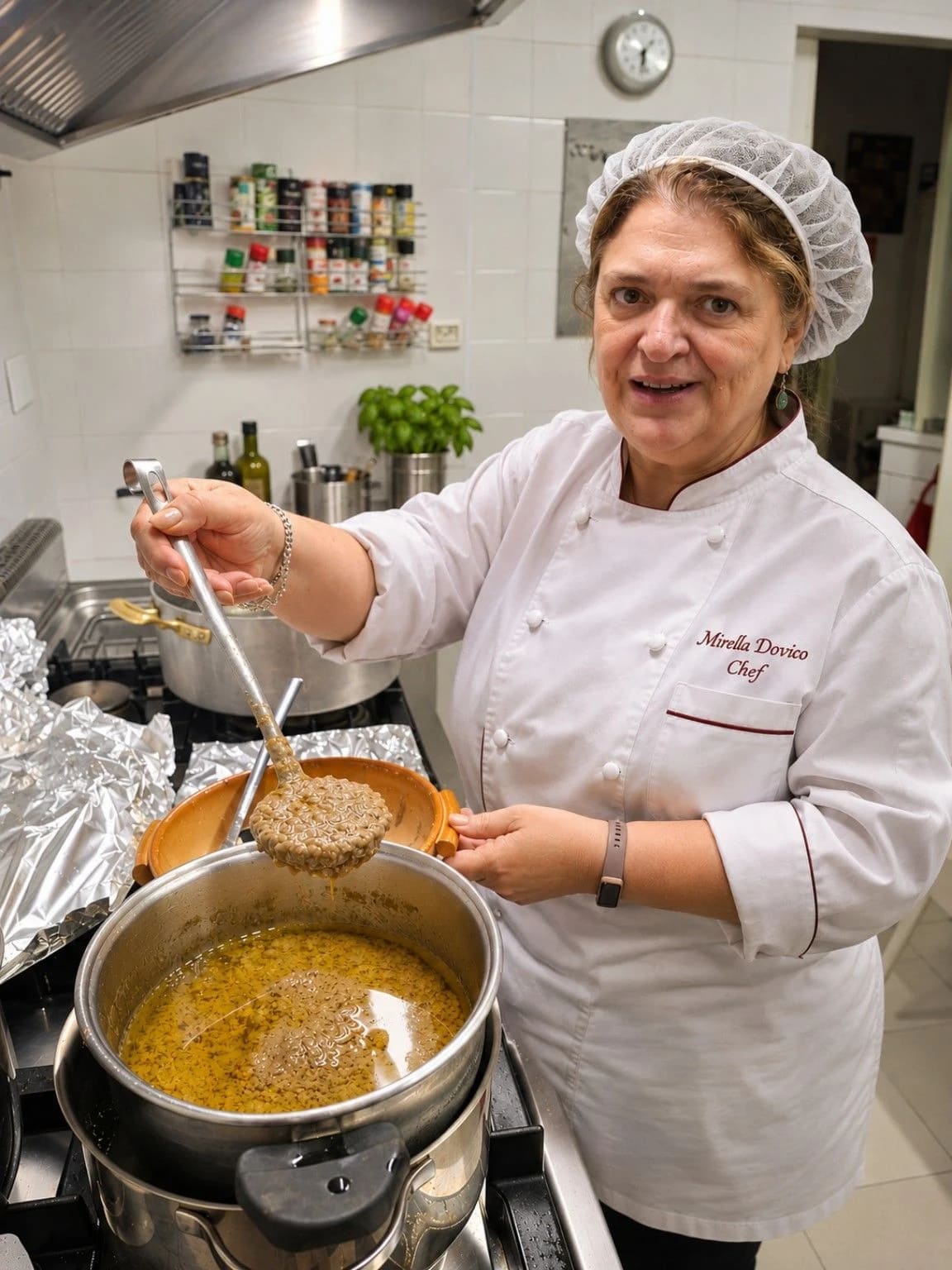
Her bagna cauda is served with a generous selection of vegetables, staying close to the preparation enjoyed in Piedmontese homes for generations.
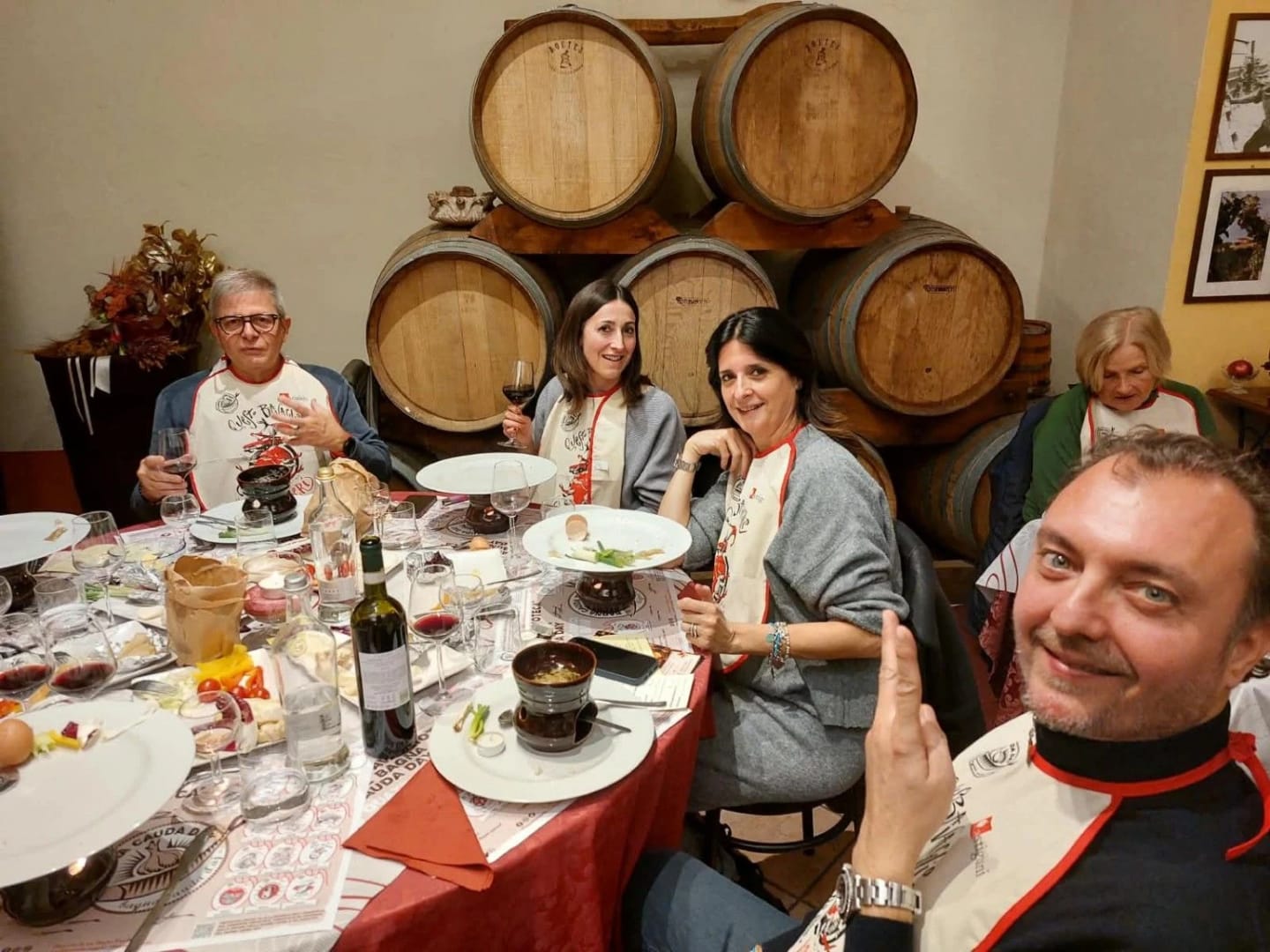
On 21 November, guests gathered at Vigneti Brichet among the wine barrels, enjoying bagna cauda, local wines and the relaxed atmosphere that has earned the establishment recognition in previous editions of the festival.
From Asti to Five Continents
While the tradition belongs to Piedmont, its appeal has travelled far beyond Italy.
In August 2026, more than 100 people attended a bagna cauda celebration in Sydney, showing that even a relatively little-known regional dish can find an enthusiastic audience on the other side of the world.
For Italians living overseas, occasions like these offer a familiar taste of home. For others, they are an opportunity to discover a part of Italian cuisine rarely seen on mainstream restaurant menus.
The traditional festival bibs, good local wine and lively conversations are all part of the experience.
Perhaps that is what makes bagna cauda so enduring. It has never needed elaborate presentation or modern reinvention.
Just a warm pot in the middle of the table, plenty of vegetables, a glass of wine and enough time to enjoy the company.
