
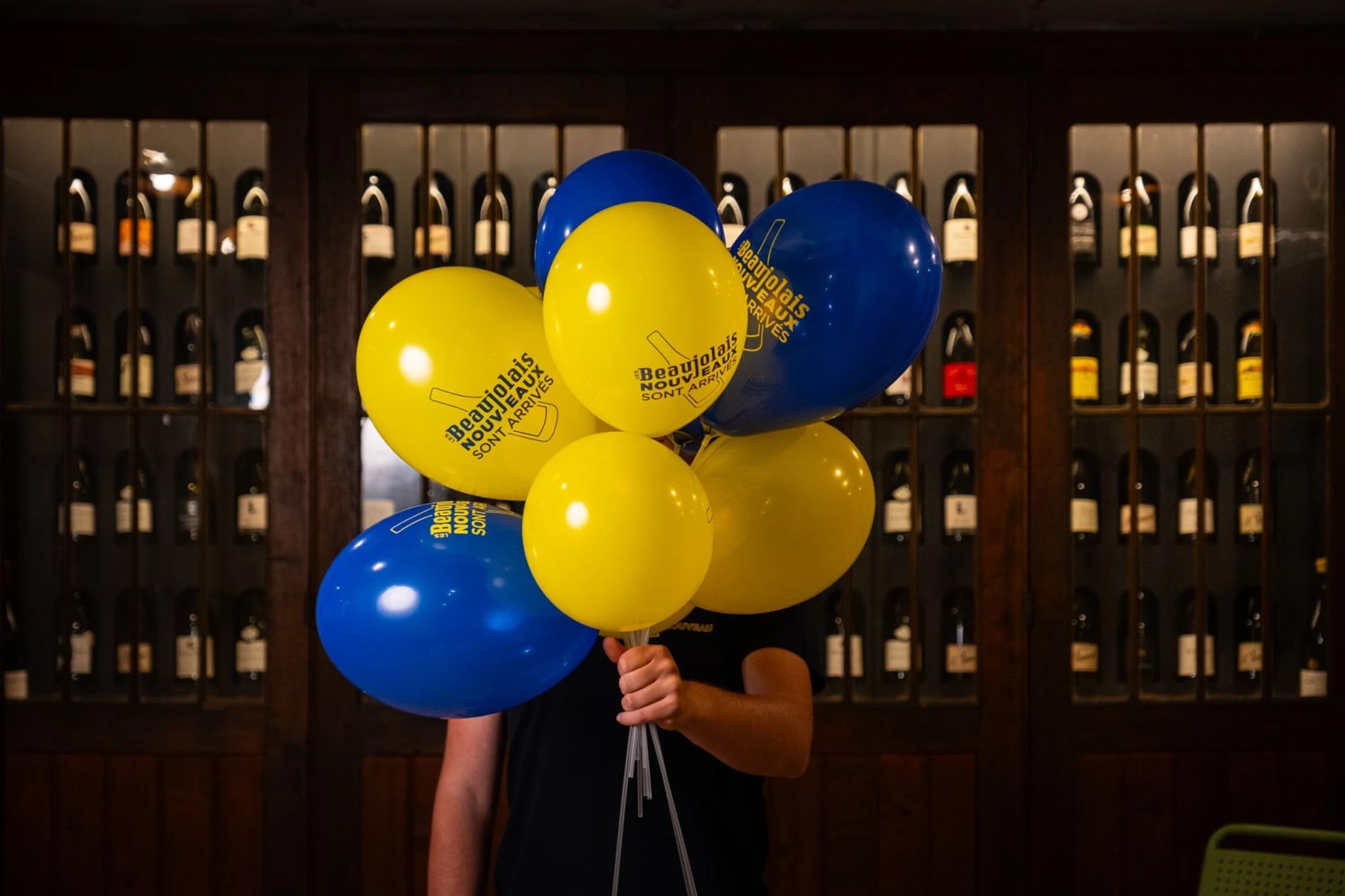
Beaujolais Nouveau is released each year on the third Thursday of November. In 2026, that date is Thursday, 19 November, when French bistros, wine merchants and restaurants around the world will welcome bottles from the latest harvest.
The familiar announcement, “Le Beaujolais Nouveau est arrivé!” — “The new Beaujolais has arrived!” — has become one of the most recognisable expressions in French wine culture.
How did a wine intended to be enjoyed within weeks of the harvest become an occasion with its own place in the international calendar? The answer begins in the winemaking communities north of Lyon.
From Local Harvest Wine to a Global Tradition
Beaujolais had long supplied the taverns and bouchons of Lyon, where fresh wines were served alongside hearty regional food soon after fermentation. These young wines offered a taste of the recent harvest and were intended for immediate enjoyment rather than years in a cellar.
By the nineteenth century, some merchants were already buying wines directly from producers and transporting them quickly to restaurants and distributors in Lyon and Paris. According to the region's official appellation documentation, fermentation sometimes continued during transportation — an indication of just how young these wines could be.
The modern tradition took shape after the Second World War, when French regulations restricted the dates on which certain appellation wines could be released for sale.
In 1951, the Union Viticole du Beaujolais successfully sought permission for qualifying wines to enter the market before the usual December date. An administrative decision issued on 13 November that year helped establish the commercial phenomenon of Beaujolais Nouveau.
Initially, release dates varied. It was not until 1985 that France established the third Thursday of November as the annual date on which consumers could purchase the new wine.
This predictable date made international distribution easier and gave restaurants, importers and wine merchants a shared occasion around which to organise their celebrations.
The Wine That Became a Marketing Phenomenon
During the second half of the twentieth century, Beaujolais Nouveau grew far beyond its regional beginnings.
Producers, wine merchants and distributors promoted the annual release through publicity campaigns, special restaurant events and increasingly ambitious international launches.
Among the most influential personalities was Georges Duboeuf, the Beaujolais wine merchant widely credited with helping introduce the region's wines to audiences overseas.
The annual launch became something of a race against time, with bottles transported rapidly to major cities to reach consumers as the new vintage was officially released.
According to the European Union's published appellation documentation, annual volumes of early-release Beaujolais climbed to approximately 500,000 hectolitres by the mid-1980s — equivalent to roughly 66.7 million standard 750ml bottles.
Remarkably, even at that level, early-release wines never accounted for more than half of the region's total production.
The phenomenon spread across Western Europe and North America, later attracting particularly enthusiastic audiences in Japan and other Asian markets.
Yet commercial success brought criticism. Some wine commentators questioned whether the excitement surrounding the November release had begun to overshadow the quality and diversity of the region's wines.
The emphasis on rapid production and immediate consumption sometimes encouraged consumers to associate all Beaujolais with simple, short-lived wines. In reality, the region also produces structured, complex wines capable of developing over several years.
Beaujolais in Numbers
The wine region remains an important part of the French wine industry, even as the balance between Nouveau and other styles continues to evolve.
Inter Beaujolais's 2025 regional figures provide some perspective:
12 protected appellations, including ten Beaujolais crus.
Approximately 2,000 wine estates and négociants, alongside nine wine cooperatives.
11,578 hectares of vines claimed under the region's appellations in 2025.
Approximately 60.5 million bottles of Beaujolais wines sold in 2025, across all appellations and styles.
Exports to 150 countries, led by the United States (5 million bottles), the United Kingdom (3 million) and Japan (2 million) in 2025.
These figures describe the entire Beaujolais region, not Beaujolais Nouveau alone.
Where Is Beaujolais Nouveau Celebrated?
The most symbolic place to experience the tradition is Beaujeu, the historic capital of Beaujolais.
Since 1989, the town has hosted Les Sarmentelles, a celebration bringing together wine tastings, local food, music and ceremonies marking the arrival of the new vintage.
One of its best-known moments takes place at midnight, when the first wines are ceremonially opened and shared with the crowd.
In 2026, Les Sarmentelles runs from 18 to 22 November, with a tasting trail through the town, dinners, concerts, markets and opportunities to discover the region's appellations.
Nearby Lyon hosts its own celebrations. In 2026, Beaujol’en Scène marks its 30th anniversary on 18–19 November, featuring tastings, music, a torchlight procession and the traditional arrival of the new wine by vintage tractor, followed by the opening of the barrels at midnight.
Internationally, Beaujolais Nouveau is celebrated through restaurant evenings, retail launches, tasting events and themed dinners.
Japan has become one of the best-known overseas markets for the annual release. Its enthusiasm for French wine and position in an earlier time zone than Europe have made it an important destination for the first bottles of each vintage.
What Makes Beaujolais Nouveau Unique?
Beaujolais Nouveau is more than simply a young red wine. Its identity is protected by France's Appellation d'Origine Contrôlée (AOC) system, which establishes requirements for geographical origin, grape varieties and production methods.
Only qualifying wines from the Beaujolais and Beaujolais-Villages appellations can carry the Nouveau or Primeur designation. The region's ten crus, including Fleurie, Morgon and Moulin-à-Vent, are separate appellations and cannot be marketed as Beaujolais Nouveau.

Red and rosé Beaujolais Nouveau are made primarily from Gamay Noir à Jus Blanc, a grape known for its bright fruit flavours and naturally fresh acidity.
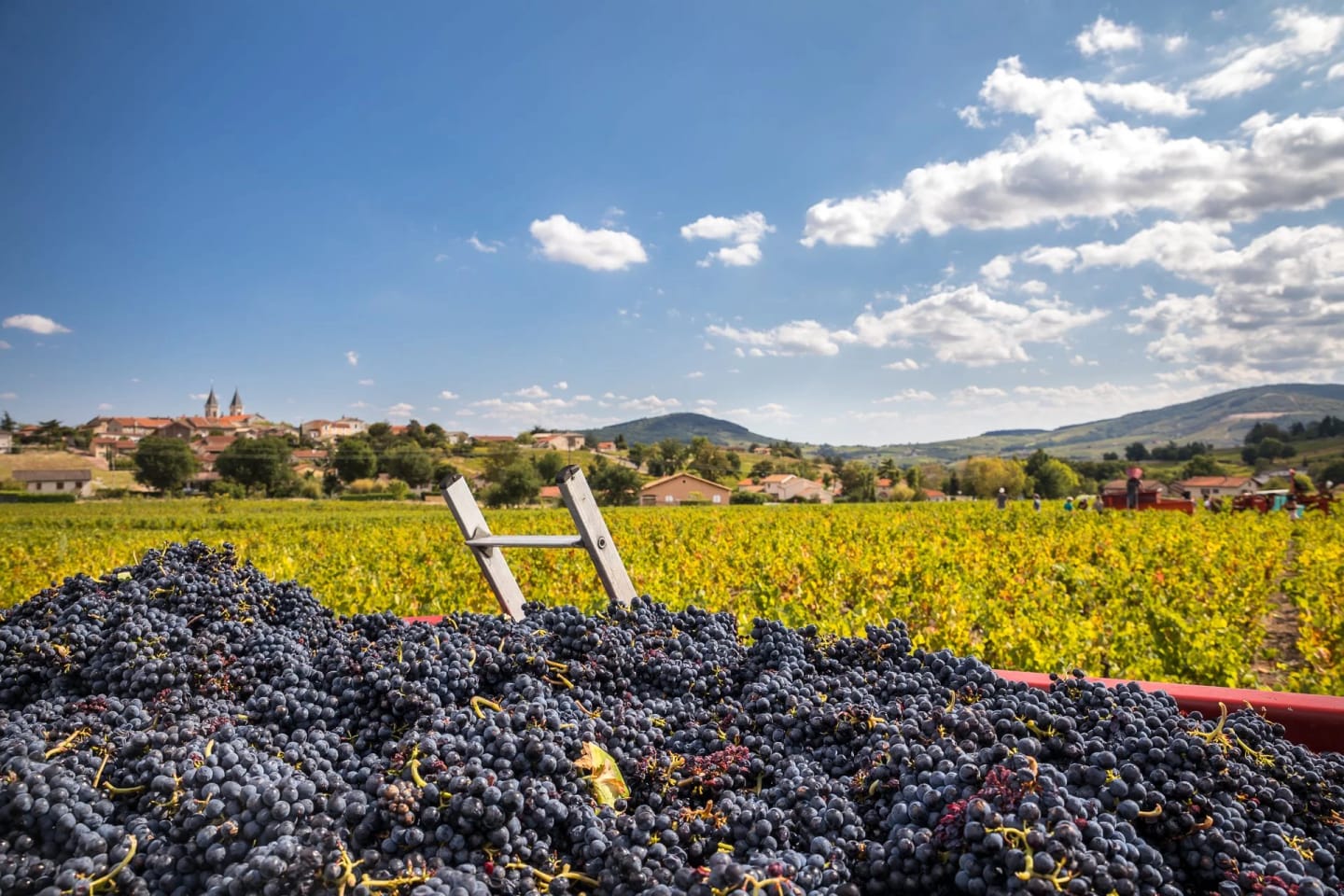
Unlike many red wines that undergo extended maceration and ageing, Beaujolais Nouveau is produced rapidly, typically using whole grape bunches and winemaking methods inspired by semi-carbonic maceration.
Shorter maceration periods help preserve youthful aromas while limiting excessive tannin extraction. The result is generally a light- to medium-bodied wine with lively acidity, soft tannins and notes of cherries, raspberries and other red fruits.
Its precise character varies by producer, vineyard and vintage. Although intended for early enjoyment, making a balanced, expressive wine within such a short period still requires careful winemaking.
How to Choose and Enjoy Beaujolais Nouveau
Choosing a Beaujolais Nouveau starts with the label. Both Beaujolais Nouveau and Beaujolais-Villages Nouveau are produced under protected appellation rules, but the Villages designation comes from a more restricted geographical area and can offer additional structure or concentration.
Check the vintage: bottles released in November 2026 should carry the 2026 harvest year. Independent estates, cooperatives and négociants offer different interpretations of Nouveau, making comparisons between producers more rewarding than choosing by price alone.
Serving temperature is particularly important. Although Beaujolais Nouveau is a red wine, Inter Beaujolais recommends serving it at approximately 12°C, slightly cooler than many traditional reds.
If necessary, chill the bottle before serving. Excessive warmth can emphasise alcohol, while serving the wine too cold may suppress its delicate fruit aromas.
There is generally no need to decant Beaujolais Nouveau, and a standard red wine glass is suitable.
When it comes to food, its lively acidity, soft tannins and fruit-forward character make it surprisingly versatile.
Charcuterie, pâtés, saucisson and terrines are traditional favourites, alongside roast chicken, pork dishes and mild cheeses.

In Lyon, Beaujolais has long accompanied the mâchon, a traditional meal featuring cured meats and other hearty regional specialities.
More adventurous pairings are possible, too. Inter Beaujolais has suggested oysters, fish and chips, and shellfish with herb butter, demonstrating that this young red wine can complement seafood as well as classic French bistro dishes.
Beaujolais Nouveau is generally best enjoyed within the months following its release, while its fresh fruit character remains expressive. Those seeking wines for longer ageing may prefer to explore the region's more structured appellations.
Ideas for Restaurants, Wine Bars and Hospitality Venues
Beaujolais Nouveau Day gives hospitality businesses an opportunity to create a seasonal experience, from tasting flights featuring different producers to Lyon-inspired menus and creative food pairings.
Serving Nouveau by the glass makes the tradition accessible to curious guests, while a comparison with wines from Morgon or Fleurie can introduce them to the wider diversity of the Beaujolais region.
A short introduction to the wine's history or production methods can give guests context for the tasting. Restaurants and retailers do not need special membership in a Beaujolais organisation to participate, although sales, service and promotional activities must comply with local alcohol regulations and the official release rules.
Beaujolais Nouveau's appeal lies in the occasion as much as the wine itself. What began as a regional harvest tradition has become an international celebration of fresh wine, good food and the simple pleasure of opening a bottle together.
